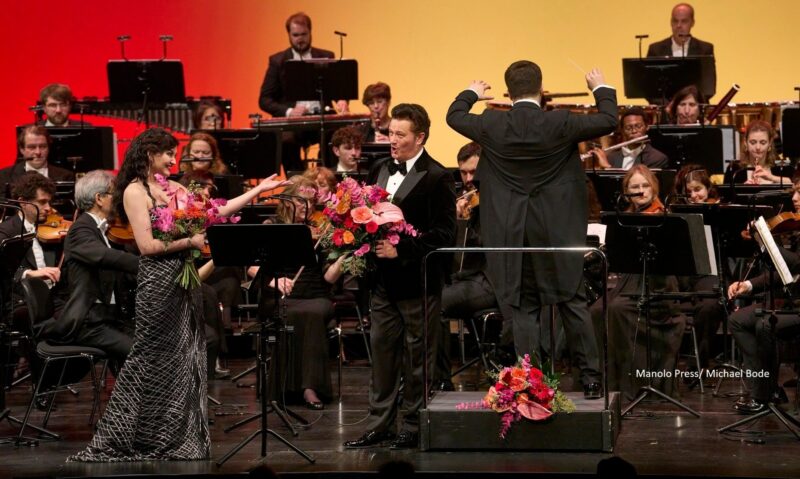
A New Star Performance: Andrea Chénier at the Metropolitan Opera
Polish tenor Piotr Beczała returns to the lead spotlight at the Metropolitan Opera as Andrea Chénier, a performance many critics already hail as among the finest of his illustrious career. His voice, described as possessing both “luxurious legato” and a “honeyed quality,” imbues the revolutionary poet with noble ardour and emotional depth.
A triumphant return of Andrea Chénier, the passionate verismo drama by Umberto Giordano, brings new energy and a stellar cast back to the Met after an 11-year hiatus. The production, conducted by guest maestro Daniele Rustioni, employs the traditional yet effective staging designed by Nicolas Joël (originally from 1996), with timeless sets and costumes by Hubert Monloup that vividly evoke the grandeur and tragedy of the French Revolution.
Leading the cast, Piotr Beczała portrays the title poet with a blend of lyrical elegance and dramatic power, while Sonya Yoncheva brings emotional intensity to the role of Maddalena. They are joined by baritone Igor Golovatenko as Carlo Gérard, creating a thrilling vocal and dramatic trio at the heart of the story.
For fans around the world unable to attend in person, there is good news: the performance of Andrea Chénier scheduled for 13 December 2025 will be broadcast in cinemas globally as part of the Met’s “Live in HD” series. This marks the first time Chénier will be presented in cinemas this season.
Selected press reviews:
“It’s been a minute since I’ve seen the Polish tenor, who before those events, was, in my eyes, one of the most elegant and riveting tenors in the world. His Adriana Lecouvreur,” his “Fedora,” and his “Luisa Miller” performances were among the best I’ve seen from any tenor in the last decade. But his “Andrea Chénier” might top them all.(…) Beczała was immaculate if a bit safe in his approach to the aria, favoring gentle legato line over dramatic intensity on the higher notes. As such, the aria lacked in variation in dynamics, though there was no reproach in terms of the vocal quality. The high notes, particularly the myriad of B flats on “T’amo” and later “Amor” shone amply in the space, though in later passages of the opera, which voice would shine with greater vibrancy and intensity.
This was especially apparent during “Chénier’s” Act two “Credo a una possanza arcano” where the tenor’s initial lines were elegantly sculpted, gradually building in intensity through the line through “Allor poartirò” and a round G. The ensuing “E questo mio destino” displayed a gentle diminuendo that allowed for gloriously delicate singing on “Io non ho amato ancor!” You could feel the intensity ramping up as muscularity set into his sound, all the way to a glowing high B flat on “Credi all’amor; Chenier tu sie amato.” The reprise of this final phrase later on with Roucher was similarly potent with the tenor imbuing it with more accentuation to emphasize Chénier’s disappointment.He delivered a sublime piano sound at the start of “Ora soave, sublime ora d’amore!” and throughout the ensuing duet, alongside soprano Sonya Yoncheva, delivered seemed to find another gear of intensity as the two sang over the volcanic orchestra.
Chénier doesn’t get a whole lot of stage time in Act three, but once he arrives, he has the challenge of “Sì, fui soldato.” Not the showiest of his arias, it is nonetheless a major touchstone that a great tenor can make the most of. Beczała did that here with luxurious legato singing throughout. Even though this passage is far more declamatory in its context and initial lines, there was always fluidity to Beczała’s singing and as such, the phrasing always had a sense of direction and build throughout the aria. The high A flat on “Uccidi?” was potent, but the final “Ma lasciami l’honor” was delivered with greater intensity, giving the aria a perfect punctuation.
Finally, there’s “Come un bel dì di maggio,” where Beczała’s lyricism was at its most poignant. The tenor’s voice had a honeyed quality to it throughout the initial phrases of the aria. That shifted to a darker urgency on “La sfera che cammina per ogni umana sorte,” the voice hardened before settling into full blown heroism on “Sia! strofe ultima Dea!” Here the tenor was at his most brilliant, shining over the orchestra, the climb up to the B flat at “gelido spiro” cathartic. I don’t think he got the applause he deserved after such an incredible rendition.
The final duet with Yoncheva was tender and heroic with the tenor’s “tu sei la meta dell’esistenza mia” visceral in its delivery. Throughout the duet, Yoncheva and Beczała inspired each other to greater heights, both of them blasting over the orchestra gloriously in the final sequences of the duet. “Viva la morte insiem” is an incredible final line and their high Bs beamed into the hall with a vigor few artists will ever manage.”
Bachtrack: “This third revival boasts a resplendent cast headed by Piotr Beczała in his role debut as the doomed poet. With his beautifully toned spinto tenor and gorgeous legato, he instantly drew the audience into his character’s emotional world in an impassioned rendition of “Un dì, all’azzurro spazio”, also known as the “Improvviso”, his famous Act 1 aria about the suffering of the poor and the indifference of the aristocracy. Another solo highlight was the sensitively rendered “Come un bel dì di maggio”, his final poem in which he compares the twilight of his existence to a beautiful day in May.“
Woman around town: “The role of Andrea Chénier has been portrayed by some of the greatest tenors of the 20th and 21st centuries. In his role debut as the doomed poet, Piotr Beczala offered a gorgeously toned vocality, with both luminous and dark hues, blossoming high notes, and exquisite legato. Chénier has four major arias and two sublime duets with Maddalena. Cutting a dashing, romantic figure onstage, Beczala sang everything with mastery and sensitive artistry. His nuanced approach to “Un dì all’azzurro spazio” combined suave legato with ardent intensity. In his Act II aria “Credo a una possanza arcana” he brought forth dramatic strength, never losing his elegant phrasing. His first duet with Sonya Yoncheva, particularly in “Ora soave, sublime ora d’amore!” increased the intensity, both singers’ voices blending flawlessly together. In Act III, Beczala’s rendition of “Sì, fui soldato” was a rousing defense of his idealism, wrapped in a luxuriously splendid vocality. “Come un bel dì di maggio” attained a peak of poetic lyricism and stirring emotions, Beczala’s voice moving from silky dreaminess to fiery valor.”
Operaclick: “Chénier è un’opera per il tenore, e qui il tenore c’era, eccome! Piotr Beczała negli anni si è spostato su un repertorio da tenore più drammatico, quindi non sorprende che sia a suo agio in Chénier. In questo ruolo ha mostrato un torrente di voce, acuti sfolgoranti, un legato e una linea musicale dalla decisa espressività e persino una dizione perfettamente comprensibile. La prova che ha dato nel “Come un bel dì di maggio” è da grande interprete: c’erano sì la convinzione e la passionalità, ma anche inaspettate finezze interpretative che arrivavano alla mezza voce.”
Broadway World: “I was happy to hear Beczala sounding and looking good (he had been ill the last two times he was set to sing when I was attending). He may have sounded a bit too loud at the start of the opera but soon was doing some fine modulation of his voice, every inch the poet (a real character) that he was portraying. He was an elegance presence, in the costumes by Hubert Monloup, even as he changed into a more political animal.”